The food shop costs more than you expected. Two days later, you are standing in the kitchen wondering how there can be so much food and nothing obvious for dinner.
Often, the missing piece is a connection between what you bought and when you will eat it.
Start with a few meals your household already likes. Then buy the ingredients that make those meals possible, including an option for the evening when nobody wants to cook.
Plan three dinners before adding extras
Choose meals with some overlap: a tomato-and-lentil pasta, a jacket potato with beans, and an egg-and-vegetable wrap. Swap in other proteins and vegetables to suit you.
Write down what you already have. A half-used bag of pasta is part of the plan, not a reason to buy a different grain because it appeared in a healthier-looking recipe.
Frozen and tinned fruit and vegetables can count towards your five a day, with the usual portions and preparation considerations. NHS weight-management guidance.
Compare usable portions, not impressive packaging
Check the unit price and how much you are likely to use. A large bag is not a saving if much of it is wasted. A more convenient option can make sense if it regularly becomes dinner instead of another takeaway—but compare your actual spending rather than assuming.
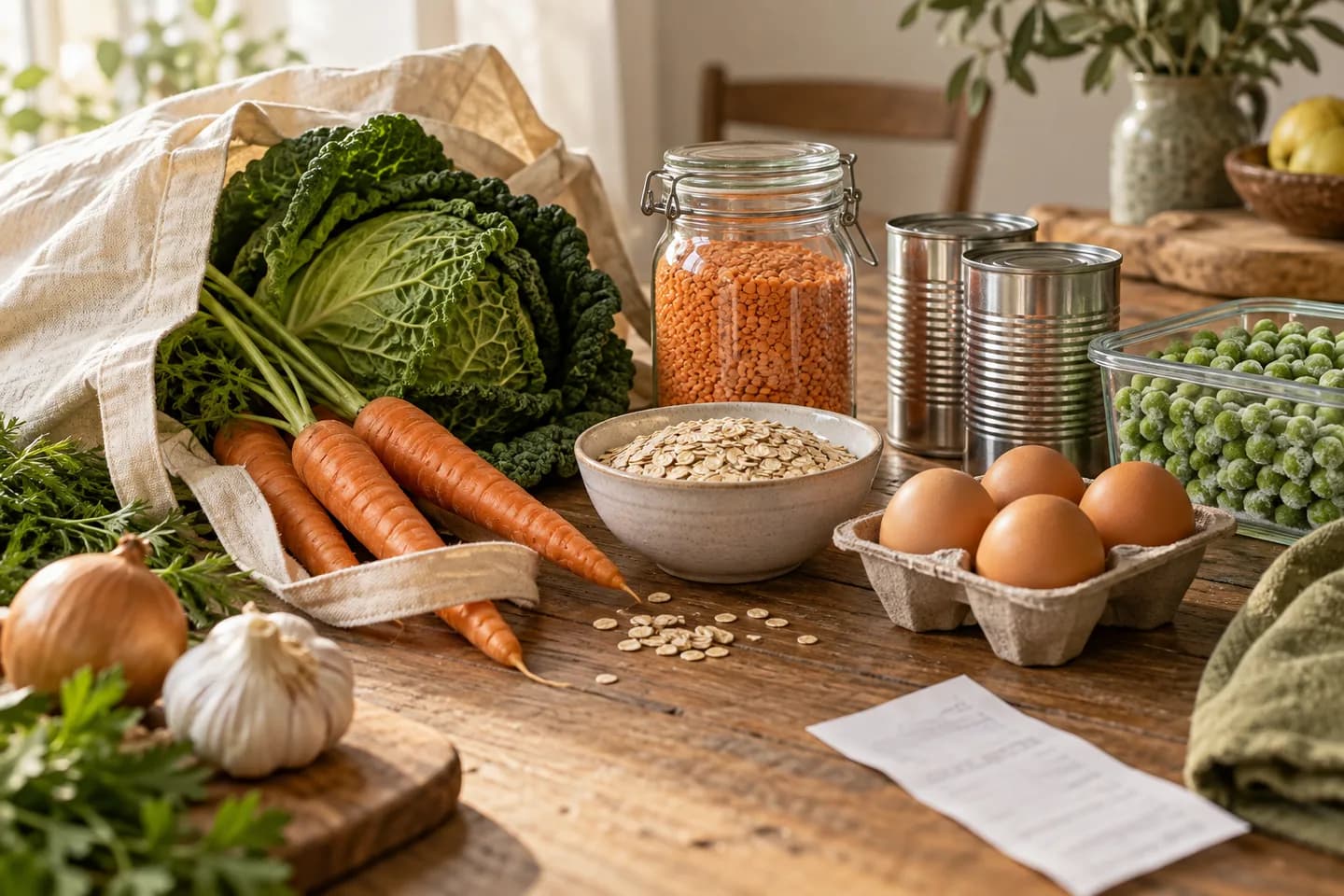
Useful things to check include oats, potatoes, wholemeal bread, beans, lentils, eggs, plain yoghurt and frozen vegetables. Prices vary, so treat this as a comparison list rather than a claim that one food is always cheapest.
Use the middle aisles too
Tinned beans, tomatoes, fish and dried grains often live there. You do not need to shop only around the perimeter.
If you buy fish, distinguish protein from omega-3 claims: sardines count as oily fish; tuna does not. NHS fish guidance.
Make tomorrow's lunch part of dinner
Before serving, decide whether there is an extra portion to cool and store safely. Use the container you already own. If you need a replacement, Black+Blum — Meal Prep Box - Set of 3 is one optional durable choice.
For carrying chilled food, Black+Blum — Insulated Lunch Bag - Moss is another optional purchase to use with an ice pack.
Neither is necessary to start saving lunch. Buying new equipment only makes financial sense if you need it and will use it.
Spend on flavour where it earns its place
Choose a few ingredients that work across several meals: a seasoning you love, lemon, mustard, or an oil for dressing.
Hunter & Gather — Extra Virgin Olive Oil is an optional premium choice.
An ordinary supermarket olive oil can do the same kitchen job. Keep the distinction clear: this is a preference upgrade, not a condition of eating well on a budget.
Put a backup meal on the list
Beans on toast, a freezer portion or a quick omelette can be enough for a busy evening. It helps to decide that before you are tired and hungry.
Your next step: use the Balanced Plate Blueprint + Shopping List to turn three meal ideas into a focused food shop.
Sources: NHS weight-management and fish guidance, linked above. Budget recommendations are practical planning suggestions; no price comparison or guaranteed saving is claimed.