You have enough numbers to remember. Your lunch does not need to become another spreadsheet.
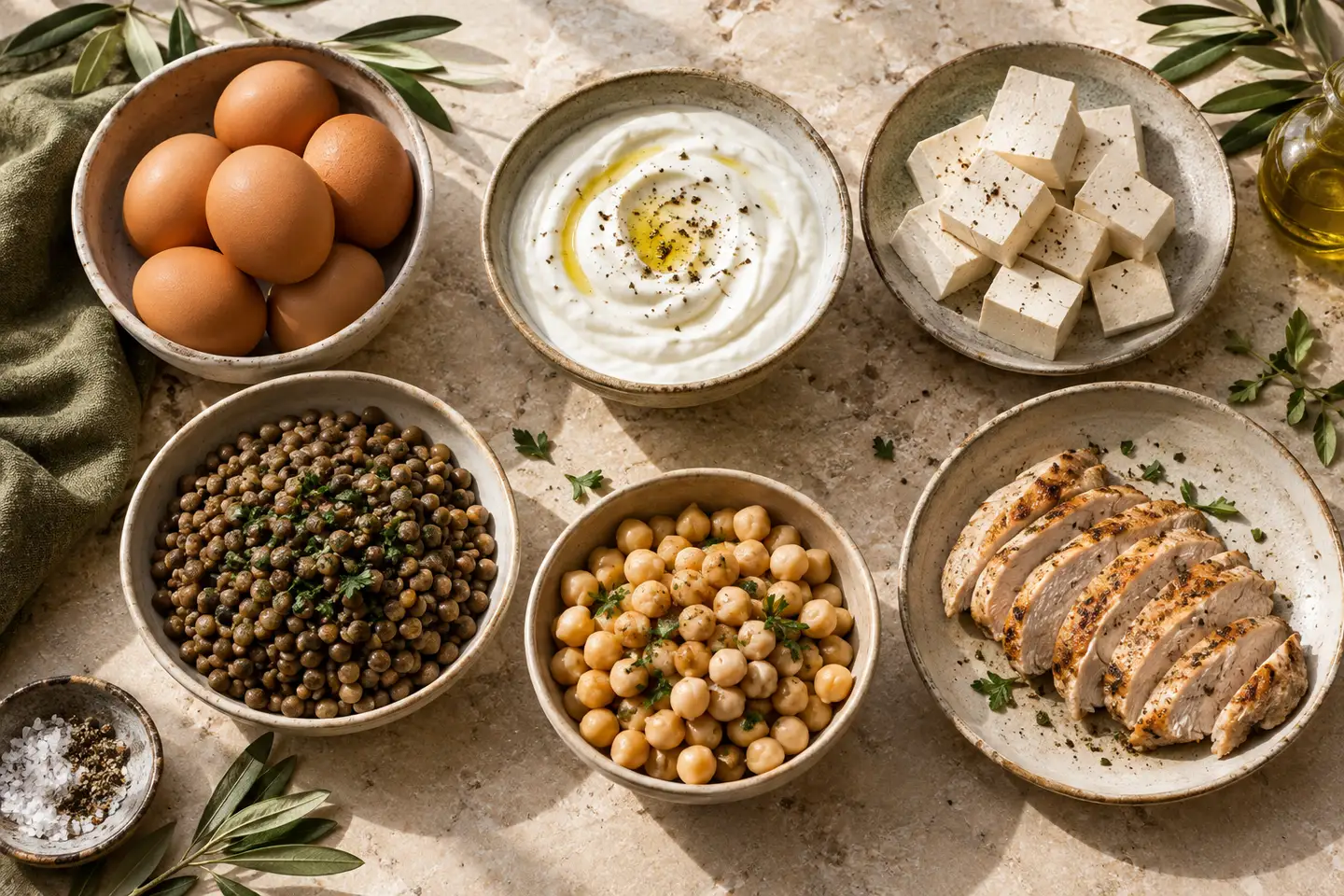
If eating more protein has turned into weighing chicken, scanning yoghurt pots and wondering whether dinner has “enough”, start with a simpler question: where does the protein come from in the meals you already eat?
You do not have to track continuously to make those meals more useful. But a rough approach is still rough: it can help you build a routine without guaranteeing an exact daily target.
Start with the meal that keeps falling short
Look at yesterday's breakfast, lunch and dinner. Perhaps dinner already includes fish or chicken, while breakfast is coffee and toast. Improving breakfast may be easier than making an already substantial dinner bigger.
Keep the toast and add eggs or cottage cheese. Serve porridge with yoghurt, or make it with milk or a suitable higher-protein alternative. Check the label: plant-based drinks and yoghurts vary considerably.
If a powder makes your existing breakfast easier, an unflavoured option such as Form Nutrition — Pureblend Protein can be mixed into a suitable recipe.
This is a convenience choice, not an extra task for everybody.
Use your hand as a starting point
A palm-sized serving of chicken, fish or firm tofu can be a useful visual prompt. It does not tell you precisely how much protein is on the plate. Different foods, thicknesses and hand sizes change the answer.
For beans, yoghurt and mixed dishes, a familiar bowl or portion may be more practical. If you need a particular target, check a few usual portions once, then repeat those meals rather than recalculating them every day.
Build three meals you can make on autopilot
Try a yoghurt-and-oat breakfast, a chicken-and-chickpea wrap, and a tofu stir-fry. Adjust portions to your appetite and needs. Keep carbohydrates, vegetables and enjoyable flavours in the picture; a protein source is one part of a meal. The NHS Eatwell Guide places protein foods within a varied overall diet.
If lunch repeatedly disappears between meetings, pack it while you clear dinner. A dedicated container such as the Black+Blum — Stainless Steel Lunch Box - Olive can make that habit convenient.
Keep chilled lunches cold. Transfer food to a microwave-safe dish if reheating; this steel box cannot go in the microwave.
Make room for the day that goes sideways
A delayed train or over-running appointment is exactly when a portable snack can help. A PRIMA — Ancestral Protein Bar - Salted Caramel is one option.
A bar is a backup, not a requirement. Choose something you like and can tolerate, and still have your meal when you can.
Does breakfast have to contain 30g?
No. There is no universal 30g breakfast rule. Requirements depend on factors including body size, activity and health. Research on protein and resistance training supports considering total intake alongside training; it does not establish one compulsory breakfast amount for everyone. Morton et al., 2018.
Your next step: choose tomorrow's breakfast tonight. For more meal ideas, explore the DMT recipe library.
Sources: NHS Eatwell Guide; Morton et al., British Journal of Sports Medicine, 2018, linked above.