You want an easier Tuesday evening. You do not particularly want a second job on Sunday.
That is the problem with meal prep plans that begin with twelve containers and end with the same chicken for five days. They solve the cooking question while creating a new one: will you actually want to eat any of it?
Start smaller. Prepare enough to remove tomorrow's hardest decision, then give yourself options for the rest of the week.
Choose components you can use twice
Pick one protein, one carbohydrate and two vegetables you enjoy. For example, chicken, potatoes, peppers and courgettes. Or tofu, rice, broccoli and carrots.
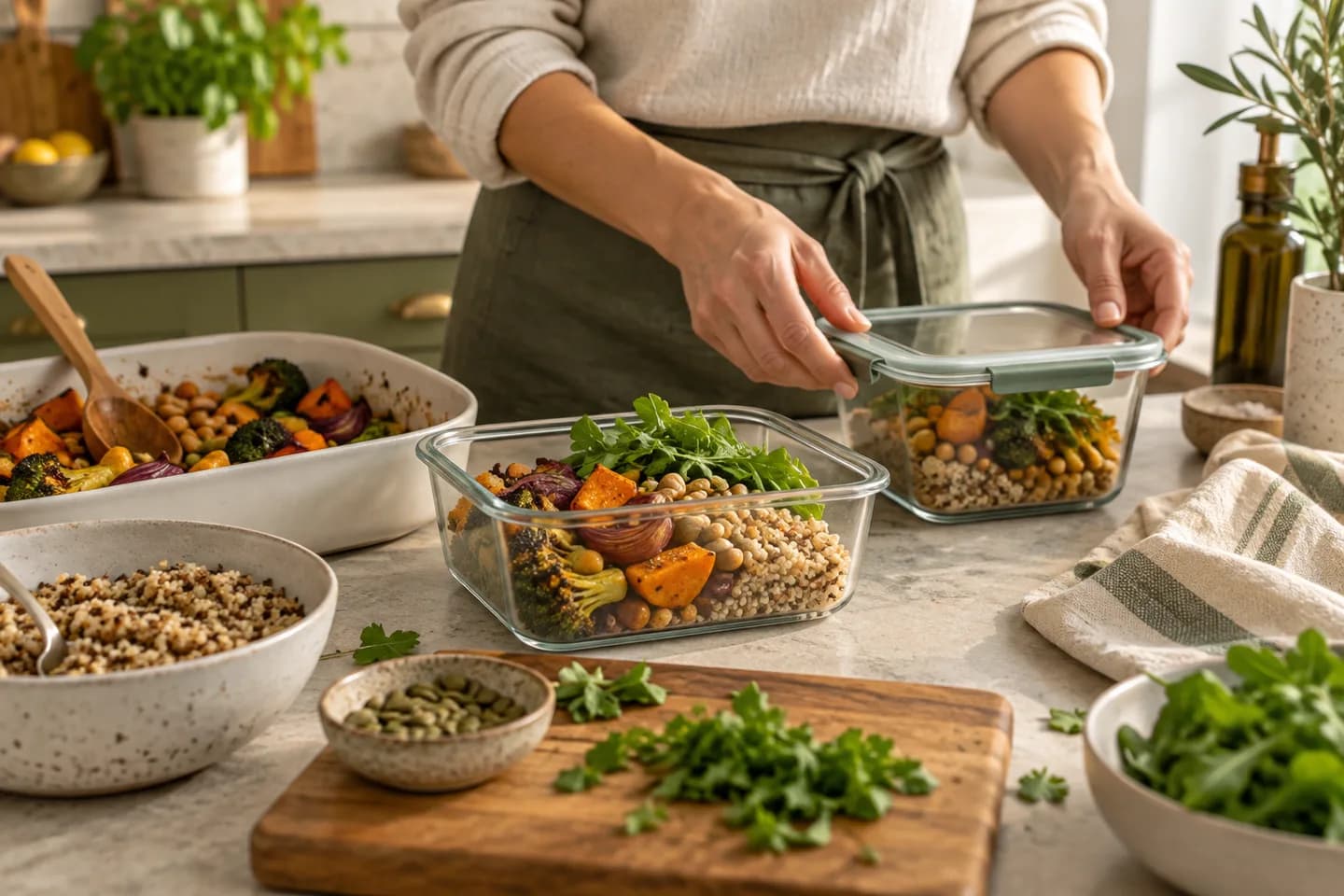
Tonight those ingredients can become a warm bowl. Tomorrow, safely stored leftovers can become lunch with a different dressing. The ingredients overlap; the meals do not have to be identical.
You can prep sauces too. Keeping a dressing separate often helps salad leaves stay crisp. Lemon, olive oil and herbs are a simple combination; Hunter & Gather — Extra Virgin Olive Oil is an optional pantry choice.
Try a manageable 45-minute session
Treat 45 minutes as a planning window, not a promise that every recipe will finish on time.
Start the component that takes longest. While it cooks, prepare vegetables and set out tomorrow's container. Use a recipe's cooking instructions and check that meat is thoroughly cooked. Leave time afterwards for safe cooling and storage.
If you only have ten minutes, wash some produce, put a tin of beans beside tomorrow's lunch box and decide what you will serve them with. That still counts as preparation.
A Black+Blum — Meal Prep Box - Set of 3 is one option for carrying the finished meal.
Check the instructions for your exact container before reheating.
Use the freezer to cover later in the week
Keep your fridge at 0–5°C. Cool most cooked food and refrigerate it within one to two hours; eat leftovers within 48 hours or freeze them. These are the Food Standards Agency's household recommendations.
Rice needs particular care: cool it quickly, ideally within an hour, and use refrigerated rice within 24 hours. Freeze promptly cooled portions for later. Reheat only once, until steaming hot throughout. FSA rice guidance.
Defrost frozen meals in the fridge and follow the guidance for that food. Do not leave a week's cooked meals sitting in the fridge because they still smell fine.
Give breakfast a shortcut too
Not every prepared meal has to be cooked. Set out a bowl and spoon, keep yoghurt in the fridge, and choose a topping. Purely Elizabeth — Almond Butter Berries Protein Ancient Grain Granola is a ready-made option for crunch.
Plain oats work too. Choose according to taste, budget and the rest of the meal.
Give warm lunches a place too
If sandwiches have lost their appeal, plan a soup or chilli you actually look forward to. A Black+Blum — Food Flask - Olive gives you another way to carry a warm lunch. Follow the flask’s preheating and food-storage instructions, and pack it close to leaving home.
Your next step: prepare one lunch, not your entire life. Pick a meal from the recipe library that you would happily eat again tomorrow.
Sources: FSA chilling/freezing guidance and home food fact checker, linked above. The session and meal combinations are editorial examples, not tested cooking-time guarantees.