It is half past four. Lunch feels like a distant memory, dinner is still an hour away, and you are trying to decide whether a snack counts as “giving in”.
That question makes an ordinary eating decision unnecessarily difficult.
A snack can be useful. It can also be enjoyable. What matters is how it fits your appetite, routine and overall eating pattern—not whether you have managed to avoid food between meals.
Match the snack to the situation
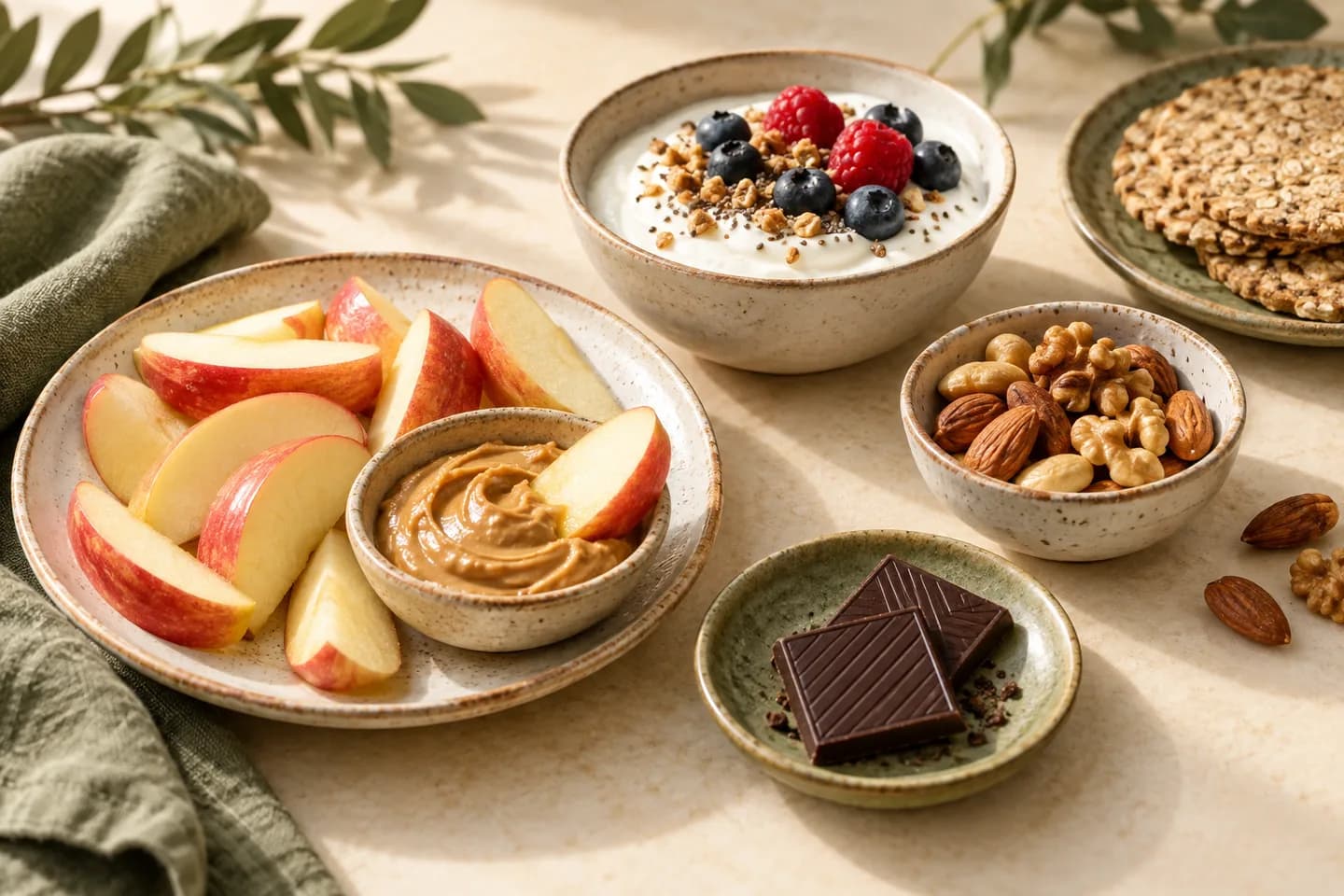
If you are genuinely hungry and dinner is a long way off, choose something substantial enough to help. Yoghurt and fruit, hummus with crackers, or toast with an egg can work.
If you will be out without a fridge, pack something suitable for that situation. PRIMA — Ancestral Protein Bar - Salted Caramel is one option to keep in your bag, following the label's storage instructions.
You do not need a snack just because a schedule says so. Equally, you do not need to wait a compulsory four or five hours if you are already hungry.
Use combinations you actually enjoy
There is no single best snack. Texture, taste, availability and portion size all influence whether it works for you.
Try plain yoghurt with fruit and something crunchy. Purely Elizabeth — Almond Butter Berries Protein Ancient Grain Granola is one ready-made topping.
Or try rice cakes with cottage cheese, peanut butter or hummus. Rice cakes do not need to be banned because they are light on their own; what you serve with them can change the eating experience.
The NHS fibre guidance includes fruit, nuts, oatcakes and crackers among practical options. A varied routine gives you more choices than another “approved snacks” list.
Sometimes you want chocolate
It is possible to want chocolate rather than a substitute you do not enjoy. Put some on a plate, sit down if you can, and give yourself a chance to taste it.
Ombar — Almond Butter Centres is one option if you like chocolate with a nut-butter filling.
It is still chocolate, and it contains added sugar. Choose it for enjoyment rather than treating its wellness-store placement as permission to ignore portions—or as a reason you must buy a more expensive version.
Repeated grazing is information
If you keep circling the kitchen, review the meal before it. Was lunch rushed? Was dinner enough? Are you postponing a break because there is always one more thing to finish?
You can respond to hunger with food and still address stress or tiredness. If eating repeatedly feels out of control or distressing, support is more useful than stricter snack rules.
Prefer a fruit-and-coconut filling? Ombar — Raspberry & Coconut is another chocolate option. Choose the flavour you enjoy, rather than treating one bar as a test of how “good” your day has been.
Your next step: choose one snack you can keep ready for your busiest afternoon. Find more ideas in the DMT recipe library.
Sources: NHS fibre guidance, linked above; NHS tips to help you lose weight for avoiding skipped meals and recognising fullness. Product details: verified Healf listings.